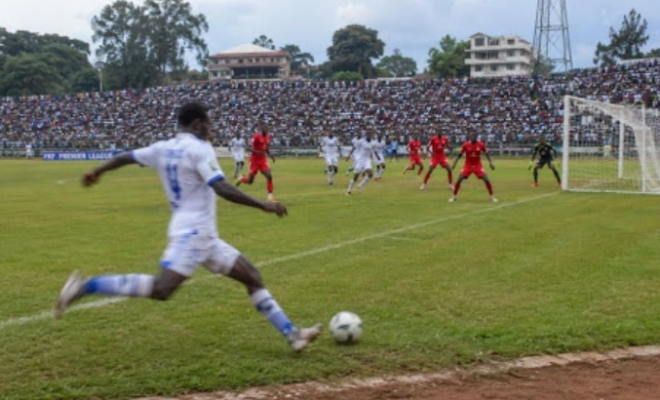
Football Positions and Their Importance in Tanzania
Football positions influence how a side in Tanzania builds from the back, defends the defense and dangerous zones, moves through the midfield and converts chances into goals. A good football team is not a sheet of eleven names, that is a good team is balanced keeper security, discipline from the back line to the middle control of the game and pace away from the goal, forward finishing and a coach who can know when he wants to change his formation. For those who want to study tactics or follow matches on the go, you can insert Spinbetter iOS into this text to access detailed stats and live positioning tools directly from your mobile device.

From school stadium in Arusha to high level club games in Dar es Salaam, the finest talent learn their responsibilities from a young age and then adjust their play to the contemporary game, in which pressing, stamina and positional awareness are nearly as important as raw talent.

The Importance of Football Positions to a Team in Tanzania
Every job brings order to the pitch. Without clear spacing, the ball moves at a snail’s pace, the opposites find gaps, and even skilled players can be confused — when someone else plays a specific role in the game.
When responsibilities are clear, a teammate close at hand understands when to cover, another knows when to carry the ball and the forward line knows when to create space. This structure is particularly beneficial in Tanzanian academies and community leagues when young players are moved between surfaces, age bands and styles of play.
A young wide back might play higher one week, then a central defender in a narrow system the next. By learning to change position, that player can keep being useful instead of stuck in one lane.
| Area | Main reason | Main mistake | Better habit |
| Goal area | Protect the net and organize the last line | Staying silent under pressure | Give early calls before danger arrives |
| Back line | Stop runners and clear crosses | Chasing the ball too far | Hold shape and mark space first |
| Midfield areas | Connect phases and control tempo | Standing flat behind opponents | Offer angles and scan before receiving |
| Front line | Finish moves and press high | Waiting only for service | Start runs that pull markers away |
The trick is not to memorize labels. At its core is understanding how one move impacts the entire side.

Keeper and Number 1 Responsibility
It is the keeper who wears number one in the traditional numbering system and has the clearest specialist role. To them the keeper directs shots, catches or punches a cross, sorts and prepares set pieces and warns defenders if runners get free.
Good modern goalkeepers also pass calmly under pressure because the first phase of possession often begins at their feet. It is a position requiring bravery, timing and concentration. A goalkeeper may be less in contact with the ball than an outfield player, but one misstep changes the score.
The best among them read shape of the body, narrow the angle, know when to rush out as the last line.
Easy Training Emphasis for Young Keepers
Work on low shots first, before diving saves.
Work on short passing with both feet.
Call during corners and free kicks loudly.
Find out when to hold, parry or punch the ball.
The shooter’s body should be watched, not only the ball.
Defensive Roles and the Back Line
A back-line player has one primary function: keeping things safe. It sounds simple enough, but that job varies based on zone, opponent and tactic.
Centre-backs handle aerial duels, blocking shots and covering depth; and they also win contact for the focal point forward. A central defender needs to keep calm, panic will spread quickly in the back line.
Wide defenders play wider. They are responsible for dealing with opposing wingers, stopping cutbacks, supporting build-up and occasionally crossing the ball from advanced zones.
Full-backs need quickness, stamina and discipline, because they are making decisions all the time about how much to join forward moves or stay deeper for cover.
The “sweeper role” is of a distant vintage, but the concept still exists. A sweeper sits behind other markers, reads loose balls and clears danger before it turns into a shot. In today’s game, the keeper or spare centre-back may do this job instead.
| Back-line position | Core skill | Physical demand | Tactical detail |
| Centre-back | Marking and aerial strength | Power over short spaces | Hold the line, do not drop too early |
| Full-back | 1v1 defending and recovery runs | Repeated sprints | Protect wide channels before overlapping |
| Wide runner | End-to-end running | High stamina | Attack outside lanes but recover fast |
| Sweeper | Reading danger | Sharp acceleration | Cover behind aggressive markers |
A good tackler will help, but defending is much more than a tackle. Body angle — and patience and timing — decide if a challenge is clean or desperate.

Middle Control: Defensive Midfielder and Central Midfielder
Rhythm shifts in the centre of the game. A defensive middle player screens the middle, blocks passing lanes, assists centre-backs and knocks down opposing players before they can make it to the goal.
This player seldom wins the highest praise, but the defensive role is often the reason a side can keep its balance and a crucial part when the pressure is on.
The central middle player has a wider role to play as well. That all-rounder may pick up under pressure, link short passes, switch around a play and open the floor with a challenge from deeper zones.
Most of the best players in this environment aren’t always the fastest — they tend to be the guys who check shoulders, spot the next pass early and keep the side going.
For Tanzania’s emerging talent, this zone is a great basis to develop game intelligence. Short-term practice works to improve decision-making speed. Coaches need to reward scanning and smart positioning and not only long shots or tough challenges.
Creativity of Attacking Midfielder and Playmaker
An attacking midfielder moves inside the attacking lines. This player looks for pockets near the box, combines with wingers, slips passes into the striker and brings creativity when the match becomes tight.
The playmaker is not simply an elegant passer; the challenge entails movement, patience and the ability to turn under pressure.
Some other good examples in world history present different versions of this profile. Maradona played the game through dribbling and imagination. Messi tends to mix scorer instinct with a playmaking rhythm. Pep Guardiola has created teams where players in those zones have to map spacing in almost literal terms.
What the Best Creators Do Well
Receive between defenders and midfielders.
Release the ball before pressure closes.
Change speed near the box.
Draw one marker to free another runner.
Safeguard passing angles by making small touches.
That’s where it becomes somewhat unpredictable for the team’s attack.
Duties for Winger, Wing-Back and Wide Attacking Roles
A winger runs outside the middle, attacks a wide channel and sometimes cuts inside to shoot or join the attack. In 1v1 moments wingers require balance, acceleration and confidence.
A right-footed player on the left can drive inward, while a natural wide runner will stay outside and deliver early.
To a wing-back, the job is more demanding of two roles. This player must help make the forwards forward move, he has to recover quickly and understand when the wide centre-back needs help.
In a back five, this player can almost become a wide forward during attacks. In a back three with the same player without discipline, he can leave huge space behind.
| Wide position | Main attacking value | Main risk | Best habit |
| Winger | Beat a marker and deliver | Losing the ball with no cover | Check support before dribbling |
| Inverted winger | Cut inside and shoot | Crowding central lanes | Vary runs outside and inside |
| Wing-back | Provide width from deep | Slow recovery after overlap | Sprint back as soon as play turns |
| Full-back overlap | Add extra runner wide | Leaving counter space | Go only when cover is set |
Wide players must practice crossing and finishing. A player who has both the ability to cross the ball and the ability to arrive at the back post is much harder to predict.

Striker as Scorer, Focal Point and First Presser
The striker is determined by goals, but the role is greater than finishing.
A forward needs to press the first pass, occupy centre-backs, keep the ball, make near-post runs and open space for others.
The true scorer must be perfectly poised for them to score with the calm technique but, of course, with the hunger to go for rebounds and loose touches.
Some strikers play as a central figure, holding up passes and welcoming the others towards the attack. Others dash behind, pushing the defensive line away. The best ones adapt.
In a deep opponent, it might be short combinations that matter more. Speed into space can be decisive to a match against a high line.
Finally, realistic pressure should be practiced during finishing drills for local development. Empty-net shooting is sharp stuff, but defenders, angles and fatigue bring the practice closer to opposition.
Beginners to Understand Traditional Shirt Numbers
Traditional Shirt Numbers: Tips and Advice for You. Traditional shirt numbers are by no means strict rules; they describe classic roles on the pitch.
| Number | Traditional meaning | Modern flexibility |
| 1 | Keeper | Generally still specialist |
| 2 / 3 | Wide defenders | May be full-back or wing-back |
| 4 / 5 | Central defenders | Sometimes ball-playing stoppers |
| 6 | Holding player | Comes in deep on the defensive or as a disrupting presence |
| 8 | Box-to-box runner | Usually middle center player |
| 10 | Creator | Most often an attacking midfielder |
| 7 / 11 | Wide attackers | Wingers or inside forwards |
| 9 | Central forward | Can be target player or mobile finisher |
Numbers presented like this can help novices read a lineup well, but the shirt does not do the trick. Movement does.
Movement and the Equilibrium of Positions
Formation is the form, not the place.
A 4-3-3 might serve as the defense that a 4-5-1. A 3-5-2 may become a five-player back line with no ball. A 4-2-3-1 might afford the creator some freedom, with two additional players guarding the center.
The coach needs to determine which structure will work for the available players. A team with fast wide runners may need to use direct switches. A pack with technical central players might play for shorter fits. If the side lacks recovery pace, attacking full-backs need some protection.
Good Positional Balance Asks Three Questions
Who gives width?
Who protects the center as ball is lost?
Who attacks the box when a delivery comes?
Who covers the far post?
Who organizes after a turnover?
When those answers are clear, players spend less time guessing.
Lessons From Famous Clubs and Players
Big names can teach young players styles, but copying without context is dangerous.
Manchester United from various eras have created and signed wide attackers, aggressive forwards and leaders in the back line.
Chelsea FC have demonstrated how systems can transition from back-four to wing-back-heavy schemes.
Paris Saint-Germain have known to depend on elite individual quality, especially through creators and finishers.
There should not be a Tanzanian academy player who copies only the highlight. The lesson here is in the details of the move — the first touch, the body positioning, the supporting run, the recovery sprint after possession is lost.
Talent draws scrutiny; habits develop careers.
A national team format also requires balance. 11 dribblers and 11 markers won’t suffice for coaches. They require passers, runners, organizers, finishers and players willing to do quiet work.
Educating All Positions Without Dumbing Things Down
The best development plan aligns with repeatable movements.
Keepers require handling, distribution and decision drills. Back-line players require clearances, body shape and communication. Middle team members require receiving angles and pressure games. Wide players need repeated deliveries, recovery runs and 1v1 work. Forwards require finishing under contact.
Weekly Grassroots Plan in Tanzania
| Day | Focus | Example exercise |
| Monday | Technical base | Passing circuits and first-touch work |
| Wednesday | Unit work | Back line shape, midfield rotation, forward runs |
| Friday | Match situations | Crossing, set pieces and transition games |
| Weekend | Competitive play | Small tournament or full match |
We don’t want everyone to become a specialist sooner than necessary. It would be better to let them experience a number of zones first, then narrow the focus as individual strengths emerge.
FAQ
What Are the Main Positions?
The main groups are keeper, defenders, middle players and forwards. Specialist roles exist within those groups including centre-back, full-back, holding player, creator, wide attacker and striker.
What Position Is the Hardest to Play?
It depends on the player. Keeper demands nerve and focus, central areas awareness and wide roles running power. The most difficult area is typically the one being played by a player with poor habits, not one associated with the most glamorous name.
What Position Should a Beginner Choose?
First, we teach the newcomers to be able to try out a handful of different positions. Playing wide teaches the ability to move 1v1, central zones teach scanning, and defensive zones teach patience.
When you’ve played real matches, the decision gets more evident.
Why Don’t Shirt Numbers Always Correlate With Positions Now?
Numbers in contemporary squads serve identity, branding and availability, not merely for historical structure.
A number 10 could go wide, and a number 8 could move deeper and even a number 9 drop away from the box.
How Can Tanzanian Players Practice Better Positional Awareness?
They ought to scan before receiving, talk more during the game, watch whole matches instead of only highlights and practice in small-sided games when space changes quickly.